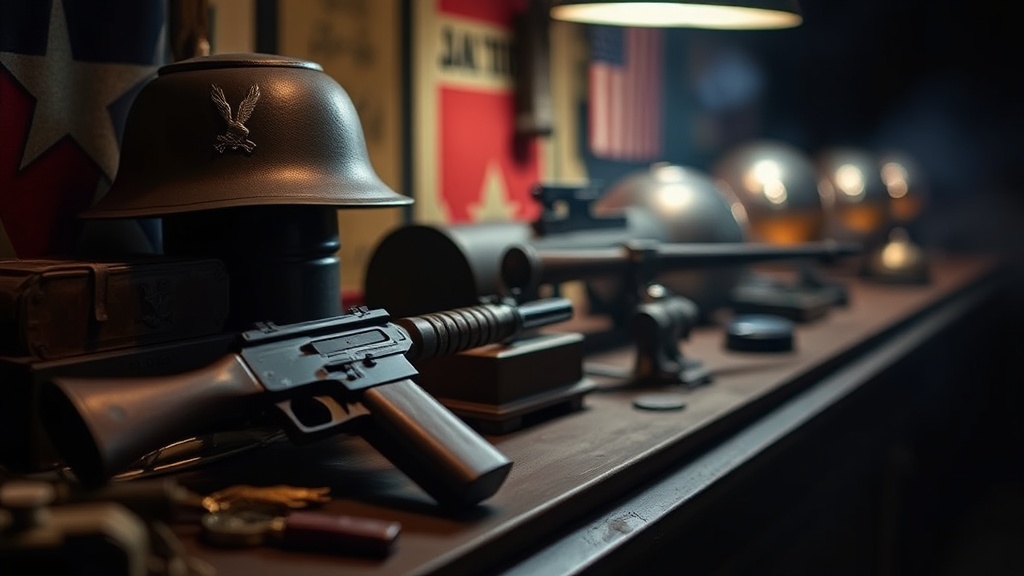
5 Forgotten War Relics That Collectors Are Paying Top Dollar For

WWII-Era Military Canteens and Mess Kits
Trench Art Bottle Caps and Shell Casings
Vintage Campaign and Regiment Pins
Original Field Dressing Tins and Medical Bottles
Military-Issue Zippo Lighters and Smoking Accessories
Some war relics sit in dusty drawers for decades while collectors hunt them at estate sales and online auctions. This post breaks down five overlooked military collectibles—mess kits, trench art, sweetheart jewelry, gas mask canisters, and trench watches—that have quietly surged in value. You'll learn what makes each piece desirable, how to spot authentic examples, and what prices these items actually fetch on today's market.
What Are the Most Undervalued War Memorabilia Categories Right Now?
Military mess kits, trench art, and sweetheart jewelry represent three categories where savvy collectors are finding significant upside. These items were mass-produced during wartime but discarded or undervalued for generations. The scarcity of pristine examples—combined with renewed interest from younger collectors—has created a seller's market.
Mess kits from World War I and World War II exemplify this trend. A standard U.S. Army mess kit from 1943 might have sold for $15 at a flea market five years ago. That same piece now commands $75–$150 if it retains its original utensil set and manufacturer's markings. The catch? Most surviving examples are dented, missing components, or stripped of their original finish. Complete kits with the M-1932 or M-1942 designations—particularly those manufactured by Higgins Industries or Revere Copper and Brass—attract the strongest bids.
Trench art occupies a unique middle ground between folk art and military history. These handmade objects—typically fashioned from shell casings, bullets, and scrap metal by soldiers during downtime—range from crude ashtrays to intricate lighters and picture frames. No two pieces are identical. That said, authentic World War I trench art with documented provenance can sell for $200–$800, while exceptional examples (elaborately engraved artillery shells, for instance) have cleared $2,000 at Heritage Auctions.
"The best trench art tells a story. A name, a date, a regiment—that's where the value lives."
Sweetheart jewelry—pins, bracelets, and lockets made from military insignia for loved ones back home—has exploded in popularity. These pieces were rarely saved. Most were worn daily, lost, or melted down. A sterling silver Army Air Forces sweetheart pin from the 1940s now sells for $150–$400 depending on condition and unit rarity. Navy submarine pins and Marine Corps emblems command premiums.
Why Are World War I Trench Watches Suddenly So Valuable?
The transition from pocket watches to wristwatches during World War I created an entire category of collectible timepieces that collectors are now scrambling to acquire. Trench watches—rugged wristwatches designed for officers and soldiers in the trenches—represent a pivotal moment in horological history. These weren't luxury items. They were tools. Dirty, beat-up, often discarded tools.
Here's the thing: most didn't survive. The porcelain dials cracked. The radium lume degraded. Cases corroded in damp trenches. A trench watch in working condition with original components has become genuinely scarce.
Brands to watch include Omega, Longines, Vertex, and Cyma. British military-issued watches with the broad arrow marking (the British government's property mark) carry particular weight. American private-purchase watches by Hamilton, Waltham, and Elgin circulate more frequently but still appreciate steadily.
| Brand/Type | Typical Condition | Price Range (2025) | Rarity |
|---|---|---|---|
| British Omega WWW (Dirty Dozen) | Original dial, running | $2,500–$5,000 | High |
| American Hamilton 982 | Service wear, running | $400–$800 | Moderate |
| German DH-marked watches | Complete, original strap | $1,200–$3,500 | High |
| Anonymous trench conversions | Pocket watch movement, wire lugs | $150–$400 | Common |
| French LIP officer watches | Engraved caseback | $600–$1,400 | Moderate |
The "Dirty Dozen"—twelve Swiss manufacturers commissioned by the British Ministry of Defence in 1944—deserves special mention. These watches (Vertex, Omega, Longines, Cyma, and others) were built to strict specifications: black dials, luminous hands, waterproof cases, and shatterproof crystals. Complete sets with matching numbers and military markings have sold for north of $30,000. Even individual pieces in honest condition trade hands for thousands.
Are World War II Gas Mask Canisters Worth Collecting?
Yes—particularly early-war examples with intact paint, original straps, and maker's stamps. The M1938 German gas mask canister (Tragebusche) has become surprisingly sought-after. These cylindrical metal containers were issued to every Wehrmacht soldier. Most were dented, repainted, or cut down for tool storage after the war.
A mint-condition M1938 with original field gray paint, leather straps, and the manufacturer's three-letter code (often EFA, FXO, or WA) can bring $300–$600. Add the original gas mask (GM-30 or GM-38) with matching numbers and uncracked lenses? You're looking at $800–$1,500. The rare M1930 canister with the early smooth paint finish commands premiums approaching $1,000 even without the mask.
American M1 and M1A1 gas mask bags tell a different story. The canvas carriers were produced in massive quantities—over 20 million units—by contractors including Firestone, Goodyear, and U.S. Rubber. Most surviving examples show hard use. A crisp, unissued M1A1 bag with intact shoulder strap and stencil markings sells for $75–$150. The masks themselves (M3, M4 series) are less desirable unless complete with original accessories and wartime dated components.
British Civilian Duty Respirators—those haunting black rubber masks issued to air raid wardens and civil defense workers—have found new collectors. Complete sets with the red-marked carrying bag and unexpired filter (careful—some contain hazardous asbestos) trade for $100–$250. The Mickey Mouse gas mask designed for children—so named for its snout-like protrusion—fetches $400–$800 in good condition. Morbid? Perhaps. Historically significant? Undeniably.
What to Check Before Buying Gas Mask Equipment
- Inspect for asbestos filters—common in British and German designs. Never open or shake old filters.
- Look for matching serial numbers between mask and canister when buying German sets.
- Check canvas bags for dry rot, mildew, and separated seams.
- Original paint beats repainted examples—patina matters more than shine.
- Verify manufacturer codes using reference guides; reproductions carry fantasy markings.
How Do You Spot Authentic Trench Art vs. Modern Reproductions?
Age leaves traces that are difficult to fake convincingly. Authentic trench art from 1914–1918 carries specific material signatures: brass with deep, uneven patina; aluminum with characteristic pitting; steel with oxidation patterns that take decades to develop. The engraving itself tells stories—hand-cut letters vary in depth and alignment; machine-made reproductions look uniform and sterile.
The best indicator? Weight and wear. A genuine brass shell casing vase feels substantial. The base shows contact marks from decades of sitting on mantels. Interior surfaces carry tarnish that can't be replicated quickly. Modern replicas—often sold as "trench art style"—feel light, look too clean, and use shell casings that don't match documented wartime specifications.
Here's the thing about dating shell casings: the headstamp markings reveal everything. A trained eye can identify the manufacturer, production year, and even the specific arsenal. RA (Royal Arsenal), WCC (Winchester Cartridge Company), and UMC (Union Metallic Cartridge) markings help place pieces historically. Suspect any "trench art" using post-1945 cartridge designs—soldiers in 1917 weren't engraving .223 Remington casings.
Provenance transforms good pieces into exceptional ones. A letter from the veteran who created it. A photograph showing the piece in situ. Even a family story passed down with the object adds value that can't be manufactured. Worth noting: documented German trench art typically outprices Allied examples—not because of ideology, but because fewer German pieces survived post-war destruction and export restrictions.
Where Are Collectors Actually Finding These Items?
Estate sales in Texas hill country towns—Kerrville, Fredericksburg, Bandera—regularly yield military collections from retired servicemen. The German immigrant communities in central Texas brought traditions of military service and souvenir collection that persist in attics and storage units. A complete M-1928 haversack or unissued M-1936 pistol belt might surface at a Saturday sale for $40.
Online marketplaces require sharper eyes. eBay remains the dominant platform, but Facebook Marketplace and specialized forums like US Militaria Forum often offer better values from collectors thinning collections rather than dealers maximizing margins. Auction houses—including Rock Island Auction Company and Morphy Auctions—handle the high-end material: named groupings, rare variations, and museum-quality pieces.
Flea markets reward patience. The Canton First Monday Trade Days east of Dallas—oldest flea market in Texas—still produces military finds among the turquoise jewelry and leather goods. Arrive early. Bring cash. Know your measurements and markings before you go.
The trend toward "micro-collecting" has changed the terrain. Rather than amassing hundreds of unrelated pieces, serious collectors now focus narrowly—perhaps only 101st Airborne patches, or solely Pacific Theater uniform groupings. This specialization creates opportunities in adjacent categories. The collector focused on airborne gear might overlook that Navy corpsman grouping. The German helmet specialist passes on the British gas mask. That gap creates buying opportunities for generalists willing to research.
Condition remains the wild card. A mint item in original packaging commands multiples over a worn example. But "been there" patina—honest wear from actual service—carries its own premium. The key is distinguishing honest age from damage. Torn straps are damage. Faded ink on a dated bag from Normandy soil? That's history you can hold.