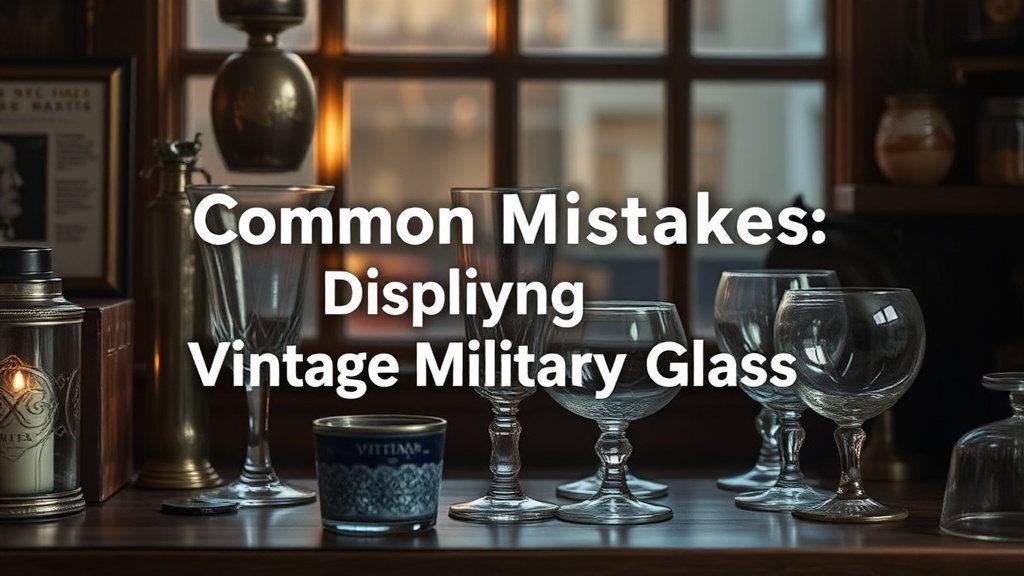
Common Mistakes When Displaying Vintage Military Glass

Direct Sunlight Exposure
Improper Vibration Management
High Humidity Microclimates
Most collectors assume that glass is a "set it and forget it" category, but that's a dangerous misconception. While a vintage glass bottle doesn't rust like a bayonet or fray like a textile, it is far more susceptible to environmental damage than most people realize. This post covers the specific mistakes collectors make when displaying military-related glassware—from apothecary bottles to specialized field glass—and how to prevent permanent damage to your collection.
Why is light exposure bad for vintage glass?
Direct sunlight and high UV exposure can cause irreversible damage to the structural integrity and aesthetic value of vintage glass. While the glass itself is stable, the light-sensitive components often associated with it—such as paper labels, internal residues, or even certain types of colored glass—will degrade rapidly under UV rays. If you have a bottle with an intact paper label, sunlight is your worst enemy. It will bleach the ink and turn the paper brittle, often making the label peel or crack away from the surface.
I've seen collectors display beautiful 1940s-era glass-stoppered bottles right next to a sunny window because they wanted that perfect "golden hour" look for a photo. It looks great for a second, but it's a death sentence for the collectible's long-term value. If you want to preserve the history, keep them in the shade.
Here's a quick breakdown of light-related risks:
- Paper Labels: UV rays cause rapid fading and "browning" of the paper.
- Colored Glass: Certain pigments (especially in soda-lime glass) can fade or shift in hue over decades of light exposure.
- Internal Contents: If you are displaying a bottle with original liquid, light can trigger chemical reactions that cloud the liquid.
If you're worried about labels, you might want to check out my previous post on preserving vintage glass bottle labels to understand the nuances of paper degradation.
How should you store glass to prevent breakage?
You should store vintage glass in temperature-controlled environments using vibration-dampening surfaces to avoid thermal shock and physical impact. A common mistake is grouping heavy glass items too closely together on a single shelf. When one item shifts—perhaps due to a heavy footfall in the room or a slight tremor—it can create a domino effect that shatters your entire display.
Don't just line them up like soldiers. Give them breathing room. If you're displaying heavy apothecary jars or thick-walled military-style bottles, ensure they aren't touching. A slight bump from a vacuum cleaner or a clumsy guest shouldn't result in a pile of shards.
The Temperature Factor
Glass is sensitive to "thermal shock." This happens when a sudden change in temperature causes the material to expand or contract too quickly. If you move a bottle from a cold basement to a warm, heated living room, the stress can cause micro-fractures. This is especially true for older, hand-blown glass which might have internal stresses already present.
It’s also worth noting that temperature affects the "seal." If you have a bottle with a cork or a glass stopper, extreme heat can cause the air inside to expand, potentially forcing the stopper out or even cracking the neck of the bottle. It's a small detail, but it matters.
| Display Environment | Risk Level | Recommended Action |
|---|---|---|
| Direct Sunlight | High | Use UV-filtering glass or window film. |
| High Humidity | Medium | Use a dehumidifier to protect paper labels. |
| Vibrating Surfaces | High | Use rubberized shelf liners or custom mounts. |
Can humidity affect glass collections?
Humidity primarily affects the secondary elements of a glass collection, such as labels, corks, and metal caps, rather than the glass itself. While the glass is largely unaffected by moisture, the environment around it is not. High humidity leads to mold growth on paper labels and can cause metal closures (like those found on vintage medicinal bottles) to oxidize and eventually seize or rust.
I've seen many collectors try to store glass in damp basements because "it's a stable environment." That's a mistake. The moisture in the air will find the one thing that isn't glass—the paper or the metal—and ruin it. If you have bottles with original metal caps, you'll want to keep an eye on them. For more on metal care, see my guide on protecting metal medals from oxidation, as the principles of moisture control are very similar.
On the flip side, extremely dry air can be just as problematic. It can make cork stoppers shrink and crack, which ruins the airtight seal of a vintage bottle. You want to aim for a consistent middle ground.
If you're looking for technical data on how different materials react to environmental stressors, the Library of Congress has excellent resources on the preservation of various historical artifacts, including paper and glass-related items. It's a goldmine for anyone serious about archival-quality storage.
Common Display Mistakes to Avoid
- Using Adhesive Putty: Never use "sticky tack" or mounting putty on the bottom of a vintage bottle to keep it upright. The chemicals in the putty can react with the glass or leave a permanent, oily residue that is nearly impossible to remove.
- Overcrowding Shelves: A single heavy bottle can cause a shelf to bow over time. If that shelf bows, the bottles at the ends are more likely to tip.
- Improper Cleaning: Using harsh chemicals or abrasive sponges to clean "grime" off a bottle can actually strip away the original patina or damage the surface of the glass.
A lot of people think a little bit of soap and water is fine. It usually is, but if you're dealing with a rare piece, be careful. For many antique bottles, the "crust" or residue on the outside is part of its history. If you scrub too hard, you're scrubbing away the story.
One thing I've noticed in the community is the tendency to use cheap, mass-produced display cases. These often have high levels of off-gassing. If you're displaying glass inside a plastic or acrylic case, make sure it's high-quality, archival-grade material. Cheap plastic can release fumes that might actually affect the labels or any organic residue inside the bottle.
It's also worth checking the stability of your shelving units. If you're displaying a collection of heavy glass bottles, a standard particle-board bookshelf might not cut it. Over time, the weight of the glass can cause the shelf to sag, which changes the center of gravity for every bottle on that shelf. It's a slow-motion disaster waiting to happen.
If you're a collector of field-worn items, you might also be interested in how to identify the authenticity of your metal-based gear. My post on selecting authentic trench art metalwork covers similar ground regarding the physical properties of historical artifacts.
When it comes to the actual placement of the glass, think about the "line of sight." You want to see the bottle, but you don't want the bottle to be the reason your shelf breaks. Always place the heaviest, most stable pieces in the center of your display, and use the edges for lighter or smaller items. It's a simple rule of physics, but it's one that saves many a collection from a tragic end.