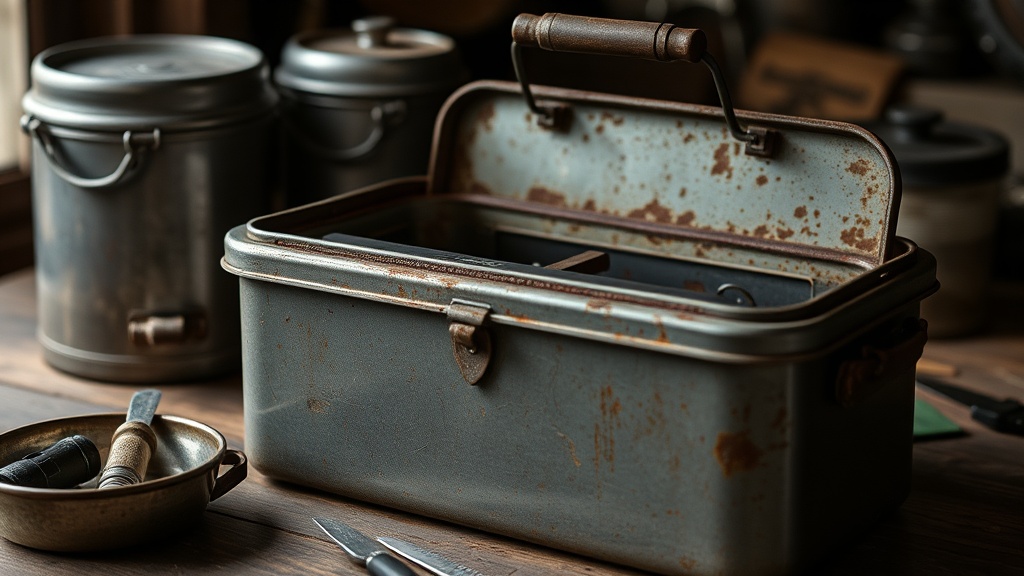
How to Restore a Corroded Military Mess Kit Without Stripping Its History

You've probably stared at a rusty mess kit at a flea market and wondered whether it's worth saving—or if you'll just destroy what's left of the original finish trying to clean it up. It's a valid concern. Military mess kits from the WWII era through Vietnam were built from steel, aluminum, and occasionally stainless steel, each metal reacting differently to decades of moisture, storage conditions, and neglect. The good news? You can bring these pieces back to functional condition without turning them into shiny replicas that lose their historical character.
Why do military mess kits corrode differently than civilian cookware?
The answer lies in wartime manufacturing priorities. During WWII and Korea, mess kits were produced rapidly—often with carbon steel that was tin-plated or enameled rather than fully stainless. The U.S. M-1932 mess kit, the German Kochgeschirr, and the British Crusader cup all share this trait. Manufacturers prioritized field durability over corrosion resistance, assuming soldiers would maintain their gear regularly. That didn't always happen, which explains why so many surviving examples show pitting, flaking enamel, or oxidation that penetrates beneath the surface plating.
Aluminum mess kits—common in post-WWII designs—present a different challenge. They don't rust, but they develop a chalky white oxidation that can look like damage to the untrained eye. This is actually protective, and removing it aggressively exposes fresh aluminum to more rapid deterioration. Steel kits with original blueing or parkerized finishes are the most delicate; once that protective layer is compromised by over-cleaning, the underlying metal becomes vulnerable to rapid deterioration. Understanding what material you're working with—and what finish originally protected it—should guide every decision you make.
What's the safest way to remove surface rust without damaging the original finish?
Start with the least aggressive method and work up slowly. For light surface rust on steel or iron components, a 24-hour soak in white vinegar often loosens oxidation without attacking the base metal. Don't leave pieces submerged longer—they'll come out looking like they've been sandblasted. After soaking, use a soft brass brush (never steel wool on plated surfaces) to gently lift loosened rust. Brass is softer than the underlying steel but harder than surface oxidation, making it ideal for this work.
For more stubborn corrosion, make a paste of baking soda and hydrogen peroxide—the consistency should be like toothpaste. Apply it to affected areas and let it work for 15 minutes. The bubbling action lifts rust chemically rather than abrasively. Wipe away with a microfiber cloth and inspect your progress. Repeat if needed, but resist the urge to scrub aggressively. Once the original tin plating or enamel starts coming off, you can't put it back. For aluminum pieces with white oxidation, skip the vinegar entirely. A solution of cream of tartar and water, gently warmed and applied with a soft cloth, lifts oxidation without the harshness of commercial aluminum cleaners.
How can you protect a restored mess kit long-term?
Cleaning is only half the battle—preservation is what keeps your work from being wasted. After restoration, steel components need a protective barrier. Renaissance Wax is the collector's standard for a reason: it provides a thin, invisible layer that repels moisture without altering appearance. Apply it sparingly with a soft cloth, buff gently, and reapply every six months if the piece is on display. For pieces going back into storage, a light coating of mineral oil works well and is easily removed when you're ready to display again.
Storage environment matters enormously. Keep relative humidity below 50%—higher levels trigger new corrosion even on protected surfaces. If you live in a humid climate (hello, fellow Austin collectors), consider silica gel packets in your storage containers or a small dehumidifier for your display area. Never store mess kits in sealed plastic bags; trapped moisture creates micro-environments where rust thrives unchecked. Cotton storage bags or acid-free tissue paper in ventilated containers are far better options.
Display choices affect longevity too. Direct sunlight fades original paint and accelerates the breakdown of protective wax coatings. Kitchen displays—while thematically appropriate—expose pieces to cooking grease and humidity spikes that accelerate deterioration. If you're showing off your collection, choose a dry, temperature-stable location away from windows and cooking areas. And here's a practical tip most collectors learn the hard way: don't nest the components of multi-piece mess kits when storing them long-term. The contact points trap moisture and create perfect conditions for corrosion to restart exactly where you worked hardest to remove it.
The satisfaction of bringing a neglected mess kit back from the brink isn't just about aesthetics—it's about preserving the tangible connection to soldiers who carried these items in impossible conditions. A properly restored mess kit tells a story that a reproduction never could. The scratches, the worn edges, the honest wear patterns from actual field use—these are the details worth preserving. Clean enough to halt deterioration, but stop before you erase the history that makes the piece worth owning in the first place.
For more detailed information on military metal conservation techniques, the National Park Service's Conserve O Gram series offers excellent technical guidance. The Smithsonian Magazine also regularly publishes articles on military artifact preservation that can expand your knowledge base.