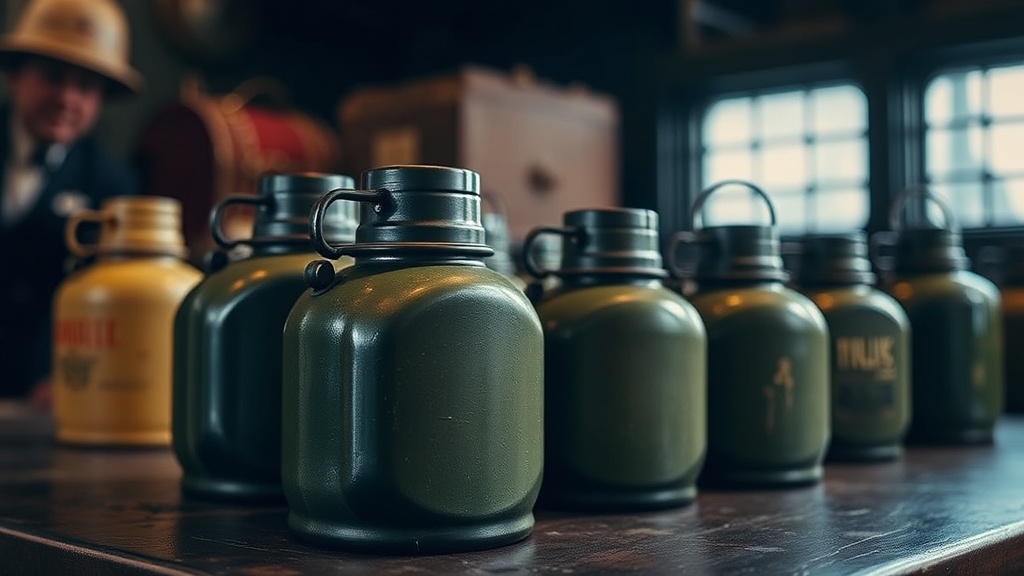
What to Look for When Sourcing Vintage Military Canteens

Finding Authenticity in Field Canteens
Have you ever held a vintage military canteen and wondered if the weight and texture actually match the era it claims to represent? Whether it's a brass-bodied vessel from the early 20th century or a plastic-coated model from a later conflict, identifying a genuine piece requires more than just a quick glance. This guide covers the physical markers, material variations, and common red flags that distinguish a combat-ready canteen from a modern reproduction or a non-military water bottle.
Collecting canteens—or "smalls" as we often call them in the trade—is a fascinating way to connect with the daily life of a soldier. It isn't just about the hardware; it's about the tactile history of survival. A canteen tells a story of a soldier's hydration, their marches through harsh terrain, and the specific technological shifts of their era. Understanding these nuances prevents you from overpaying for much-loved but inaccurate pieces.
How do I identify the material of a vintage canteen?
The material is your first clue. Before the widespread use of plastics, most military canteens were made of metal or leather. If you're looking at pre-WWI or WWI-era items, you'll frequently encounter brass, copper, or even tin. These metals have a specific patina—that aged, weathered look—that is hard to fake. A piece that looks too shiny or lacks any signs of oxidation is often a red flag (unless it has been professionally cleaned, which we generally advise against for collectors).
During the mid-20th century, specifically around WWII, there was a massive shift toward aluminum and stainless steel. These are lighter and more durable. If you're holding a piece that feels suspiciously light or looks like modern aluminum, check the manufacturing stamps. Authentic military-issue items often have specific markings or manufacturer codes. You can research specific military specifications through resources like the National Archives to see how certain materials were standardized during specific conflicts.
Leather-wrapped canteens are also common. In many cases, the "canteen" is actually a combination of a metal or hard-plastic flask and a leather carrier. When inspecting these, look at the stitching. Hand-stitched leather looks different from machine-made, modern-day replicas. The leather should show signs of drying or aging, but it shouldn't be brittle to the point of crumbling. If the leather looks brand new and perfectly supple, it might be a modern reproduction.
What markings prove a canteen is authentic?
Authentic military gear rarely leaves much to the imagination regarding its origin. Look for manufacturer marks, often called "maker's marks," which are usually embossed or stamped into the metal or leather. These might include a company name, a serial number, or a specific military designation. For example, a WWI-era canteen might have a very specific shape and a stamp that identifies the government agency or the foundry responsible for its production.
A common mistake is assuming a single stamp makes a piece authentic. A fake can easily include a fake stamp. Instead, look for the consistency of the tool marks. If a stamp is too perfectly crisp, it might be a modern laser engraving. Authentic historical stamps often show a bit of irregularity or a slight "strike" that affects the surrounding metal. You can often find detailed breakdowns of these markings by studying museum catalogs from the Smithsonian Institution.
- Check the Cap: The cap is a huge giveaway. Is it a screw-top with a rubber gasket, or a cork-style stopper? The mechanism should feel heavy and functional, not flimsy.
- Examine the Strap: The fabric or leather strap attachment points (the loops) should look aged. If the loops are made of modern nylon, the item is either a hybrid or a replica.
- Look for Patina: A natural patina is a sign of age. Avoid pieces that have a "distressed" look that feels forced or artificial.
Can I still use a vintage canteen for water?
This is a frequent question, and the answer is a cautious "probably not." If you are looking at a brass or copper canteen, there is a risk of metal leaching, especially if the interior hasn't been treated or if it's very old. Even with stainless steel or aluminum, the internal linings of vintage items can degrade over time. If you're a collector, I suggest using these for display only. If you want a functional canteen for hiking, buy a modern one that mimics the aesthetic.
Furthermore, many vintage canteens were designed to hold more than just water; they might have held spirits or other liquids that could have left a residue. Even if you clean it, the microscopic traces of the past are there. For the sake of your health, keep these as historical artifacts rather than hydration tools. A piece of history belongs behind a glass case or on a dedicated display shelf, not in your backpack on a mountain trail.
When you're out at flea markets or estate sales, don't be afraid to ask questions. Ask the seller if they know the provenance of the item. A seller who knows their stuff will be happy to talk about the manufacturer's mark or the era. If they can't answer anything, proceed with caution. The world of military smalls is full of beautiful pieces, but it's also full of things that look the part but lack the soul of a true relic.
Always remember that the value of a canteen lies in its story and its authenticity. A battered, scratched, and slightly dented canteen that saw actual service is worth much more to a serious collector than a pristine, shiny, and fake version. Embrace the imperfections. Those scratches and dents are the marks of a history lived, a history that makes the piece worth owning.