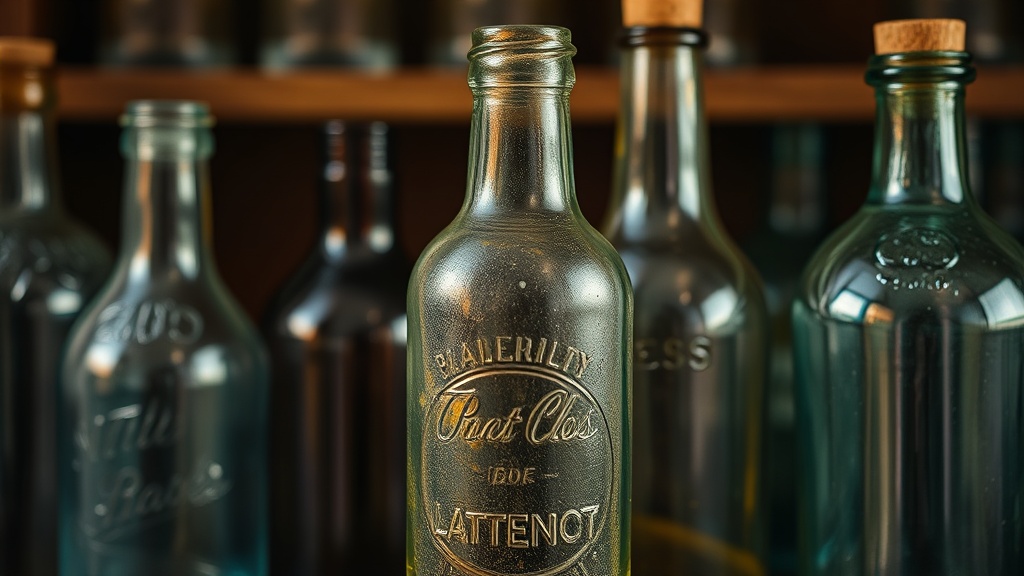
Why Do Vintage Glass Bottles Show So Much Surface Wear?

Have you ever picked up a vintage glass bottle only to find the surface feels slightly rough or pitted, rather than perfectly smooth? This texture often leaves collectors wondering if they've found a damaged piece or something much more interesting. This post covers the various reasons behind surface irregularities in vintage glass—from manufacturing quirks to environmental damage—and why these imperfections actually help tell the story of the object's age.
When we talk about glass in the context of military or industrial history, we aren't just talking about a container. We are looking at a snapshot of a specific era's manufacturing capabilities. Whether it's a medicinal bottle from the early 1900s or a heavy-duty industrial vessel, the way the glass interacts with its environment reveals a lot about its true provenance.
Is the Rough Texture From Manufacturing Defects?
Often, what looks like damage is actually a byproduct of the original production process. Before automated machinery became the standard, glass was often hand-blown or molded in ways that left behind certain signatures. You might see small bubbles (known as seeds), flow lines, or even slight ripples in the glass. These aren't flaws in the sense that they ruin the value; they are evidence of the era's technology. For instance, many bottles from the late 19th and early 20th centuries show much more surface irregularity than modern mass-produced glass because the cooling process wasn't as controlled. These variations in thickness and texture can actually help a collector verify the age of a piece.
One specific thing to look for is "mold seams." If a bottle has a seam that runs all the way up the neck, it's a clear indicator of how it was formed. If the seam stops, it's a sign of a different process. These subtle details are what separate a high-quality collector piece from a cheap modern reproduction. You can learn more about the technical aspects of glass-making history through resources like the Coryell Museum or specialized glass registries.
Does Environmental Exposure Cause Glass Pitting?
If you find a bottle that looks like it has been "eaten" by the ground, you're likely seeing the effects of chemical interaction with the soil. This is a common sight in archaeological finds or items recovered from old battlefields and encampments. When glass sits in acidic or alkaline soil for decades, the surface can undergo a process called leaching. This is where the alkali in the glass is pulled out, leaving a microscopic network of voids. This creates that characteristic "frosted" or matte appearance that many collectors find appealing.
This isn't just a surface-level issue; it can actually change the structural integrity of the glass over time. However, a light coating of "sick glass" (glass that has become cloudy due to chemical instability) is often a sign of genuine age. If you're looking at a collection of field-recovered bottles, expect these variations. The level of pitting can tell you if a bottle was buried in damp, acidic earth or if it was simply sitting on a dry shelf in a warehouse. It’s a physical record of its survival through history.
Can You Clean Mineral Deposits Without Damaging the Glass?
One of the biggest dilemmas for any collector is how to handle a bottle that has heavy mineral buildup or "crust" on the outside. You might see a thick, white, or even colorful layer of calcium or lime that won't budge with a simple rinse. The temptation to scrub it away is strong, but you have to be careful. If you use harsh chemicals or abrasive tools, you might strip away the very patina that proves the bottle's age. A light soak in a weak vinegar solution is a common starting point, but even that carries risks if the glass is chemically unstable.
Always remember that with vintage glass, "clean" is a relative term. A piece that looks slightly weathered or has a bit of stubborn residue is often more valuable to a serious collector than a piece that looks brand new. If you want to learn more about the chemistry of glass aging, the Smithsonian Institution offers excellent-level-specific resources on material science and historical preservation. My advice? If the residue doesn't affect the view of the contents or the structural stability, leave it alone. The history is in the grime, too.
Another thing to watch for is "iridescence." This is that rainbow-like sheen that sometimes appears on old glass. While it looks beautiful, it is actually a sign of the glass surface breaking down due to moisture and mineral exposure. While it's highly sought after by some, it's a reminder that the glass is slowly changing. It's a delicate balance between preserving a beautiful object and acknowledging its natural decay. When you're out hunting for new finds, keep an eye out for these textures—they are the fingerprints of the past.
Whether you are looking at a simple apothecary bottle or a more complex piece of industrial glass, understanding these surface qualities is part of the fun. It turns a simple object into a complex puzzle. The next time you see a bottle with a dull, pitted, or uneven surface, don't see it as a defect. See it as a piece of evidence that tells you exactly where that object has been and what it has endured.